Drone Dropped Munitions Identification Guide
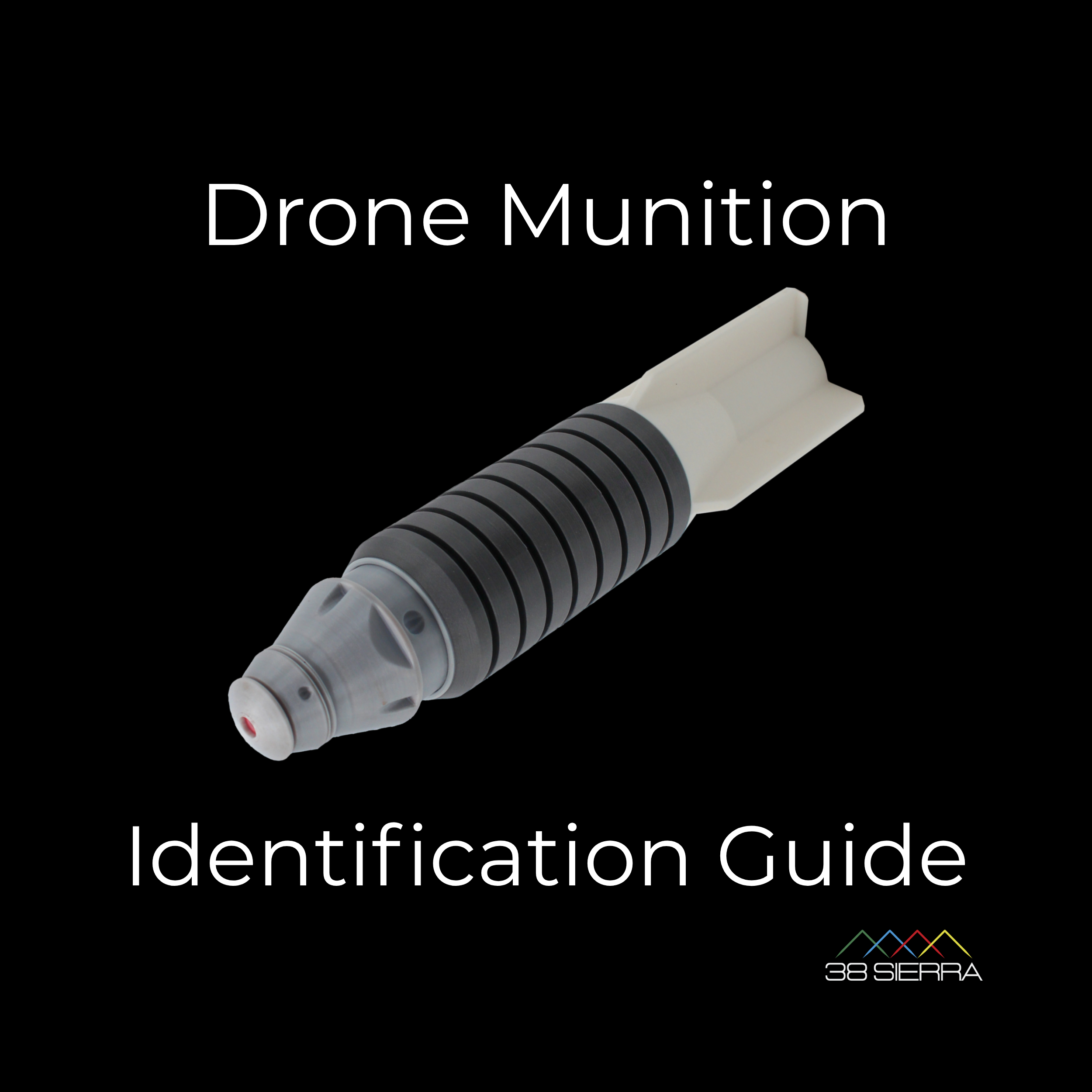
OFSP 0.8 Drone Dropped Munition
Recognition and Hazard Familiarization for Drone-Delivered Munitions
Small unmanned aircraft systems (sUAS) are increasingly being used to deliver explosive payloads, fragmentation bomblets, improvised munitions, and hazardous payloads across modern conflict environments and emerging criminal threat landscapes.
These drone-delivered hazards have been widely observed in overseas conflicts and are increasingly influencing how military personnel, law enforcement, corrections agencies, critical infrastructure operators, and security personnel prepare for drone-related incidents.
Unlike conventional explosive threats, drone-dropped munitions may be encountered:
in unexpected locations
partially concealed or embedded in terrain
detached from the drone itself
mixed with crash debris
or configured in unfamiliar ways that differ from conventional military ordnance
Many of these devices are small, visually unfamiliar, and difficult to identify without prior exposure or training.
This guide provides visual recognition and hazard familiarization information for common drone-delivered munitions and payload categories encountered in Counter-UAS training and Drone Incident Response Training (DIRT) environments.
Why Recognition Matters
Drone-dropped munitions are often encountered by personnel who are not explosive hazard specialists.
In many incidents, the first person to encounter a drone-delivered munition may be:
patrol officers
correctional personnel
military security forces
critical infrastructure personnel
facility employees
or frontline security staff
Some drone-delivered munitions are adapted from existing military ordnance, while others are purpose-built or improvised specifically for aerial deployment.
These devices may:
resemble debris or damaged equipment
appear partially buried or concealed
remain unexploded after impact
involve improvised components
or contain hazardous filler materials
Personnel encountering suspected drone-delivered hazards should prioritize:
maintaining safe standoff
avoiding unnecessary handling
establishing scene control
preserving scene integrity
and notifying Bomb Squad, EOD, or other specialized personnel when appropriate
The presence of one drone-dropped munition may also indicate:
additional munitions nearby
detached payload components
hazardous substances
or associated drone-related hazards in the surrounding area
Modified Conventional Munitions
VOG-17 Drone Dropped Munition
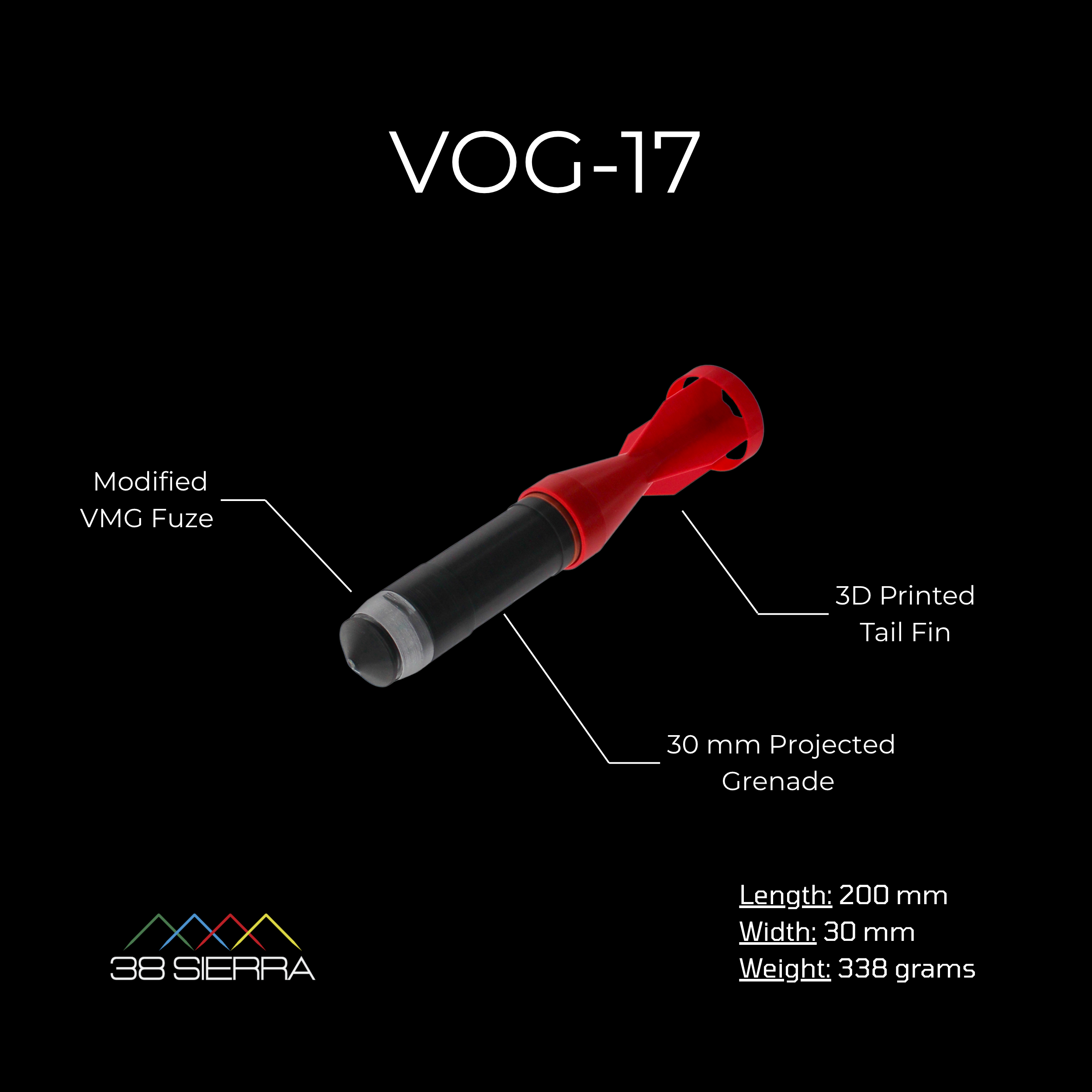
VOG-17 drone dropped munition with tail fin assembly used to stabilize the munition during drone deployment.
Munition Type
30mm projected fragmentation grenade modified for drone deployment
Common Characteristics
Modified VMG fuze
3D-printed tail fin assembly
Compact fragmentation munition profile
Commonly associated with commercial drone platforms
Recognition Considerations
VOG-series grenades are among the most commonly observed drone-dropped munitions in modern conflicts. These grenades are typically modified with tail fin assemblies that stabilize the munition during descent and orient it nose-down for impact initiation.
Because of their size, VOG-series munitions may be difficult to locate in:
grass
leaves
debris fields
rooftops
drainage areas
or partially concealed terrain
Training Considerations
Training scenarios should include partially concealed placements and multiple munition search problems to reinforce visual recognition and search discipline.
M430 Drone Dropped Munition
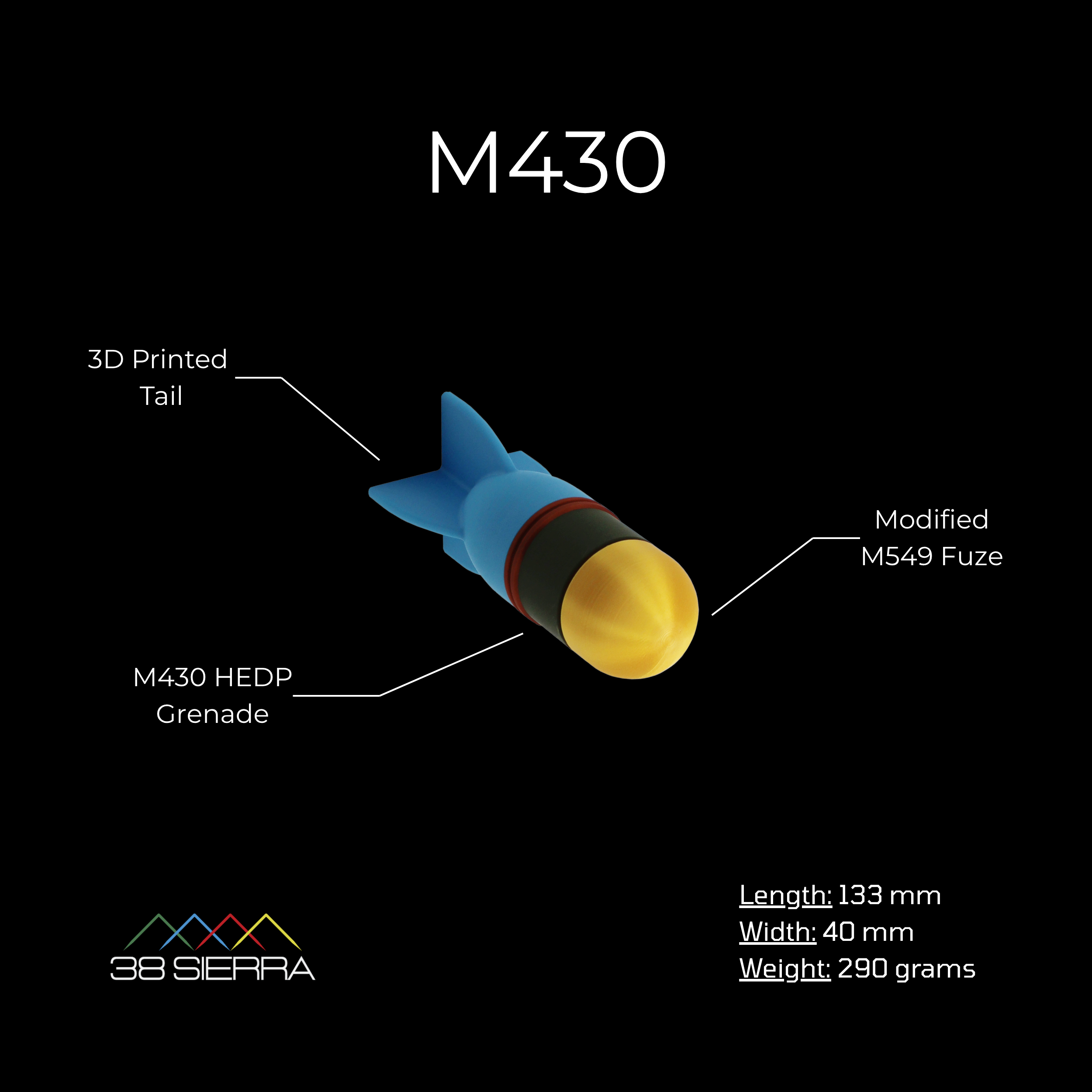
M430 40mm grenade modified for drone deployment with tail stabilization assembly.
Munition Type
40mm High Explosive Dual Purpose (HEDP) grenade modified for drone deployment
Common Characteristics
Modified M549 fuze
Tail fin stabilization system
High explosive fragmentation hazard
Frequently associated with modified commercial drones
Recognition Considerations
The M430 grenade has been adapted for drone deployment through manual fuze modification and tail fin integration. These munitions may be deployed individually or in multiples.
Because these grenades may be encountered in locations inconsistent with traditional grenade employment assumptions, personnel may not immediately recognize them as explosive hazards when first encountered on the ground.
Training Considerations
Training scenarios should include:
rooftop placements
pavement surfaces
interior facilities
vehicle impacts
and realistic drone crash debris fields
Improvised Drone-Delivered Explosive Devices
Domestic Threat 3 Improvised Drone Munition
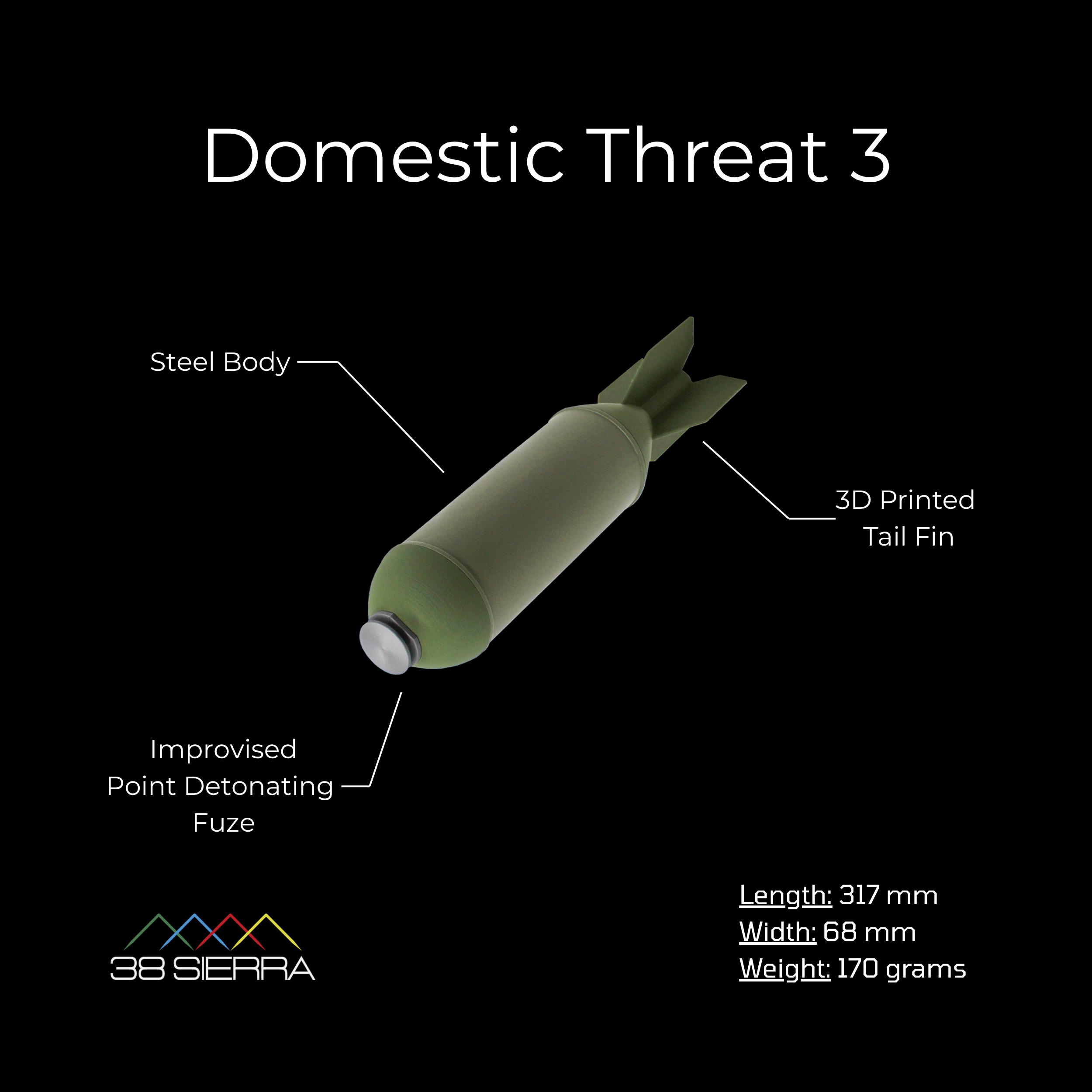
Improvised drone bomblet designed specifically for deployment from small unmanned aircraft systems.
Munition Type
Improvised drone-delivered explosive device
Common Characteristics
Improvised point-detonating fuze
Steel body construction
Tail fin stabilization system
Non-standard munition profile
Recognition Considerations
Improvised drone-delivered explosive devices are highly variable in design and construction.
Unlike conventional military ordnance, these systems may:
use improvised materials
vary significantly in shape and size
include non-standard components
or resemble homemade or commercially modified objects
Personnel should avoid relying solely on recognition of known military munitions when assessing suspicious drone-delivered payloads.
Training Considerations
Training should emphasize:
suspicious object recognition
non-standard munition identification
and visual assessment of improvised aerial threats
Purpose-Built Drone Bomblets
OFSP-08 Drone Dropped Munition
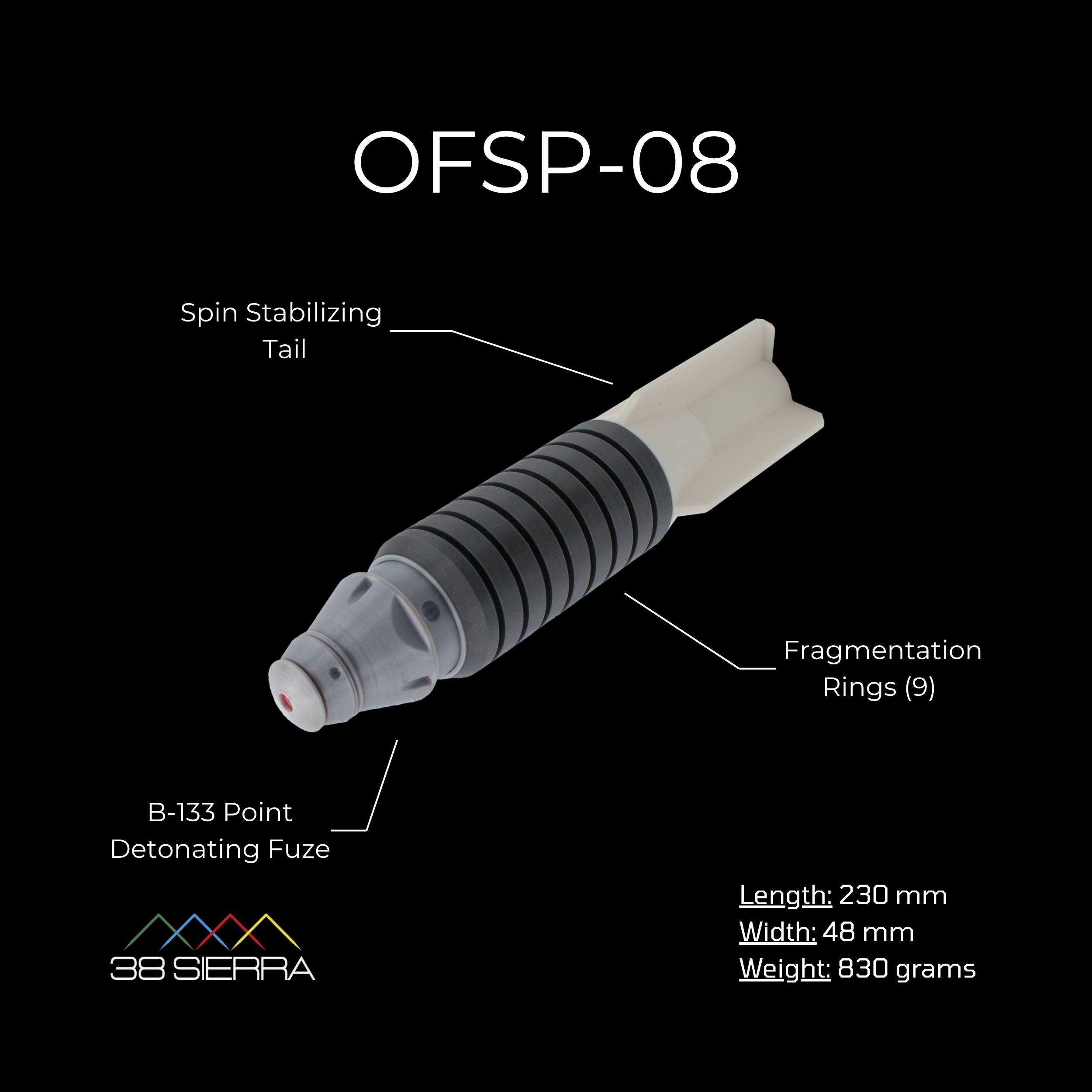
OFSP-08 Drone Dropped Munition
Munition Type
Purpose-built fragmentation bomblet designed for drone deployment
Common Characteristics
Spin-stabilizing tail assembly
Fragmentation rings
Point-detonating fuze
Optimized for small drone payload capacities
Recognition Considerations
Unlike modified conventional grenades, the OFSP-08 is specifically engineered for aerial deployment from unmanned aircraft systems.
Purpose-built drone bomblets may not resemble traditional military ordnance commonly encountered by responders, increasing the risk of delayed recognition or misidentification.
These devices may be encountered:
on rooftops
on vehicles
partially buried nose-down
inside facilities
in parking lots
or in elevated locations following impact
Training Considerations
Training scenarios should reinforce recognition of:
non-standard munition profiles
multiple bomblet deployments
and partially concealed impact locations
Hazardous Material Delivery Systems
Chemical Type 1 Drone Delivered Hazard
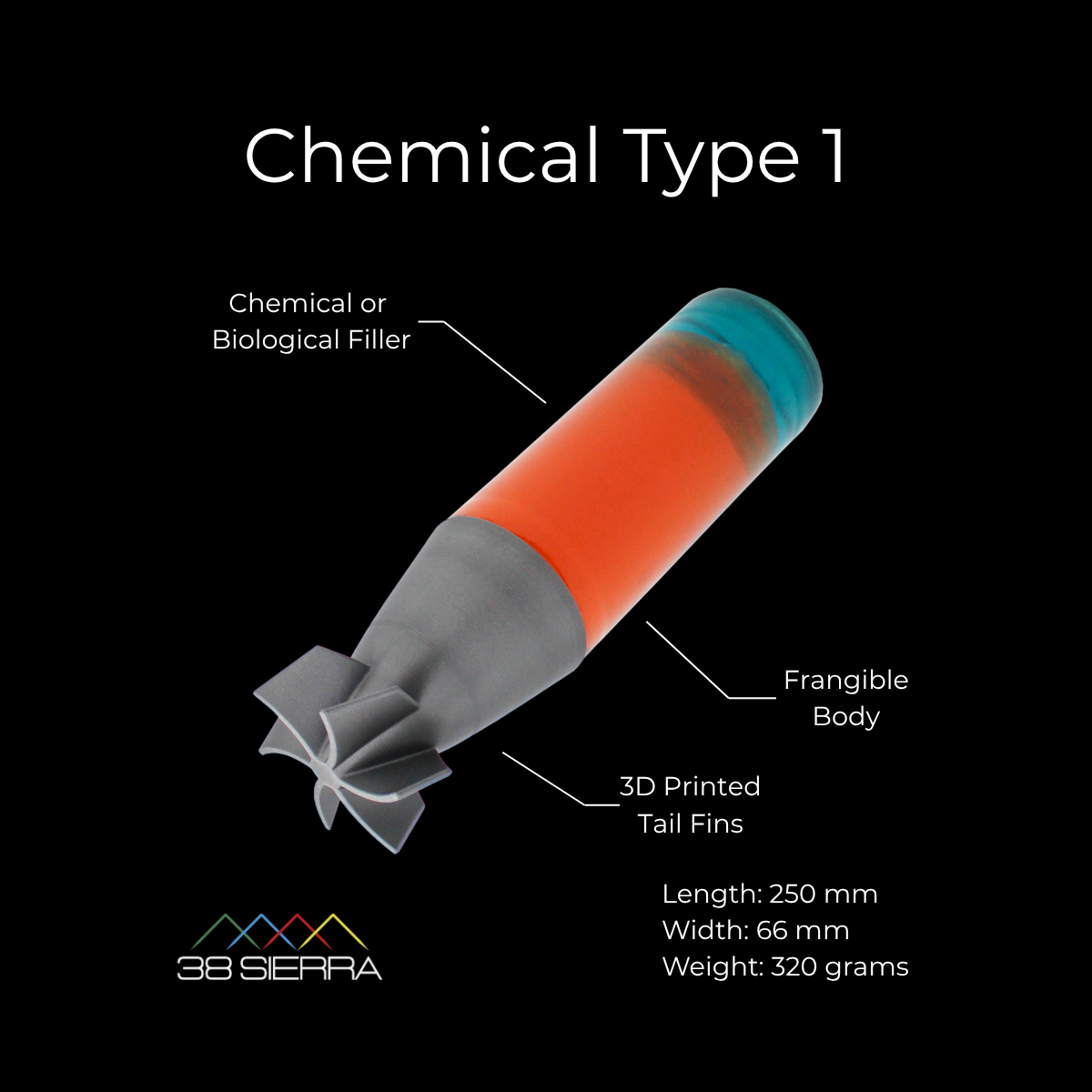
Chemical Munition Type 1
Hazard Type
Drone-delivered hazardous material dispersal payload
Common Characteristics
Frangible body construction
Tail fin stabilization system
Payload cavity for hazardous filler materials
Designed for aerial dispersal concepts
Recognition Considerations
Not all drone-delivered hazards are fragmentation munitions or explosive devices.
Some payloads may be configured to disperse:
hazardous substances
unknown powders
liquid materials
or chemical contaminants following impact
These payloads may initially resemble improvised bomblets or non-explosive containers, increasing the potential for delayed recognition or improper handling.
Training Considerations
Training scenarios should reinforce:
recognition of non-fragmentation payloads
caution around damaged containers
awareness of unknown substances
and recognition of suspicious filler materials
Common Locations Drone Dropped Munitions May Be Encountered
Drone-delivered munitions and hazardous payloads are commonly encountered:
on rooftops
in parking lots
on roadways
near perimeter fencing
on vehicles
in grassy areas
partially buried in soil
inside warehouses or facilities
in trees or elevated locations
near industrial equipment
or mixed within drone crash debris
Training should expose personnel to realistic placement conditions rather than relying exclusively on open, easily visible training environments.
Training Implications for Counter-UAS Programs
Organizations developing Counter-UAS capabilities should ensure personnel receive training not only on drone detection, but also on recognition of drone-delivered hazards encountered during the ground phase of an incident.
Effective training programs should include:
drone-dropped munition familiarization
visual recognition training
hazard identification
search considerations
scene awareness
reporting considerations
and coordination with specialized responders
Scenario-based training using inert training aids allows personnel to improve:
visual recognition
search discipline
hazard awareness
reporting accuracy
and operational preparedness in realistic training environments
Conclusion
Drone-delivered munitions and hazardous payloads are no longer limited to overseas conflict zones or isolated incidents.
Personnel across military, law enforcement, corrections, critical infrastructure, and security environments are increasingly likely to encounter drone-delivered hazards during routine operations and drone-related incidents.
Recognizing these munitions, understanding how they are commonly deployed, and identifying suspicious payload characteristics are becoming increasingly important components of modern Counter-UAS preparedness.
Training with realistic inert representations helps personnel improve familiarity, hazard recognition, and awareness of evolving drone-delivered threats before encountering them in real-world environments.