
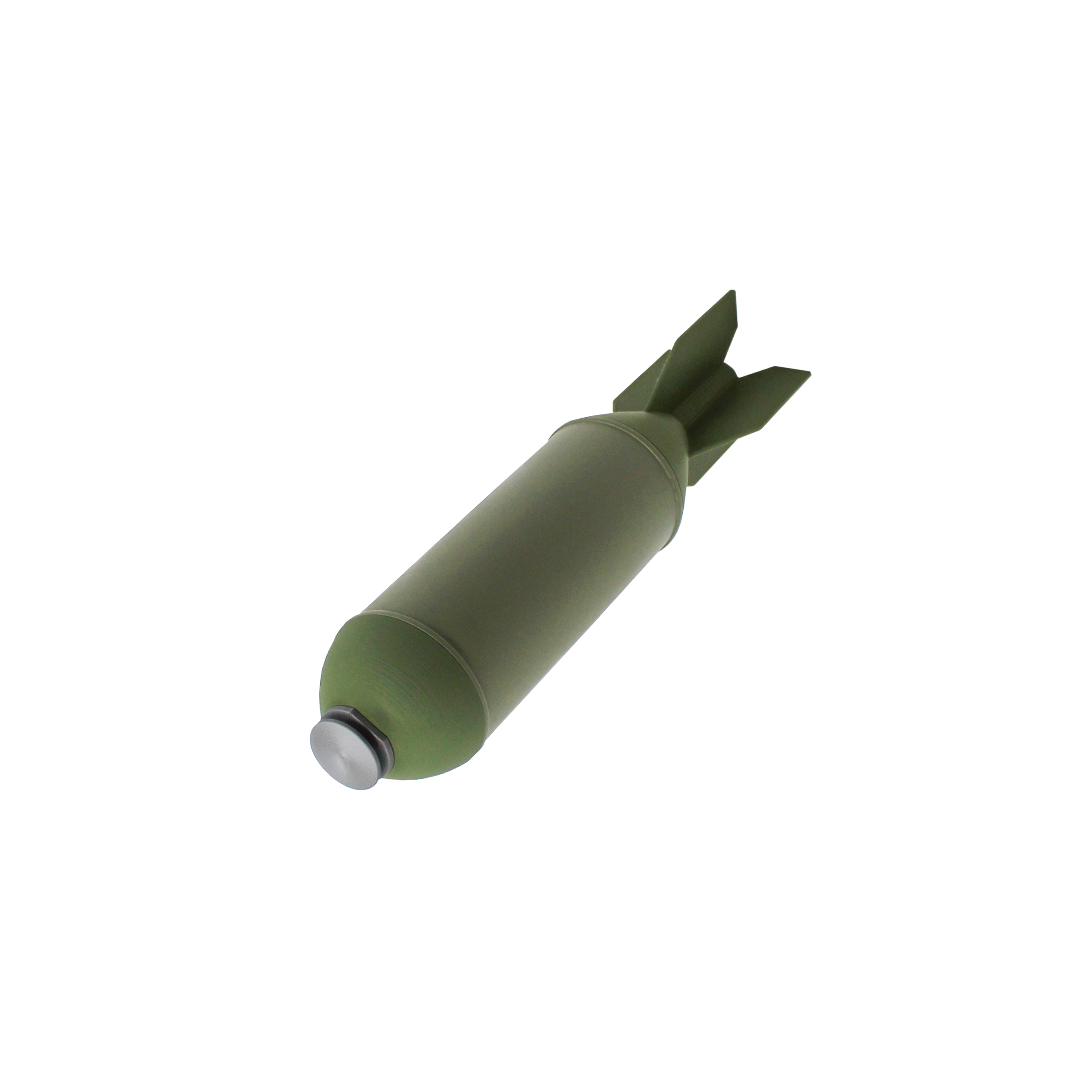
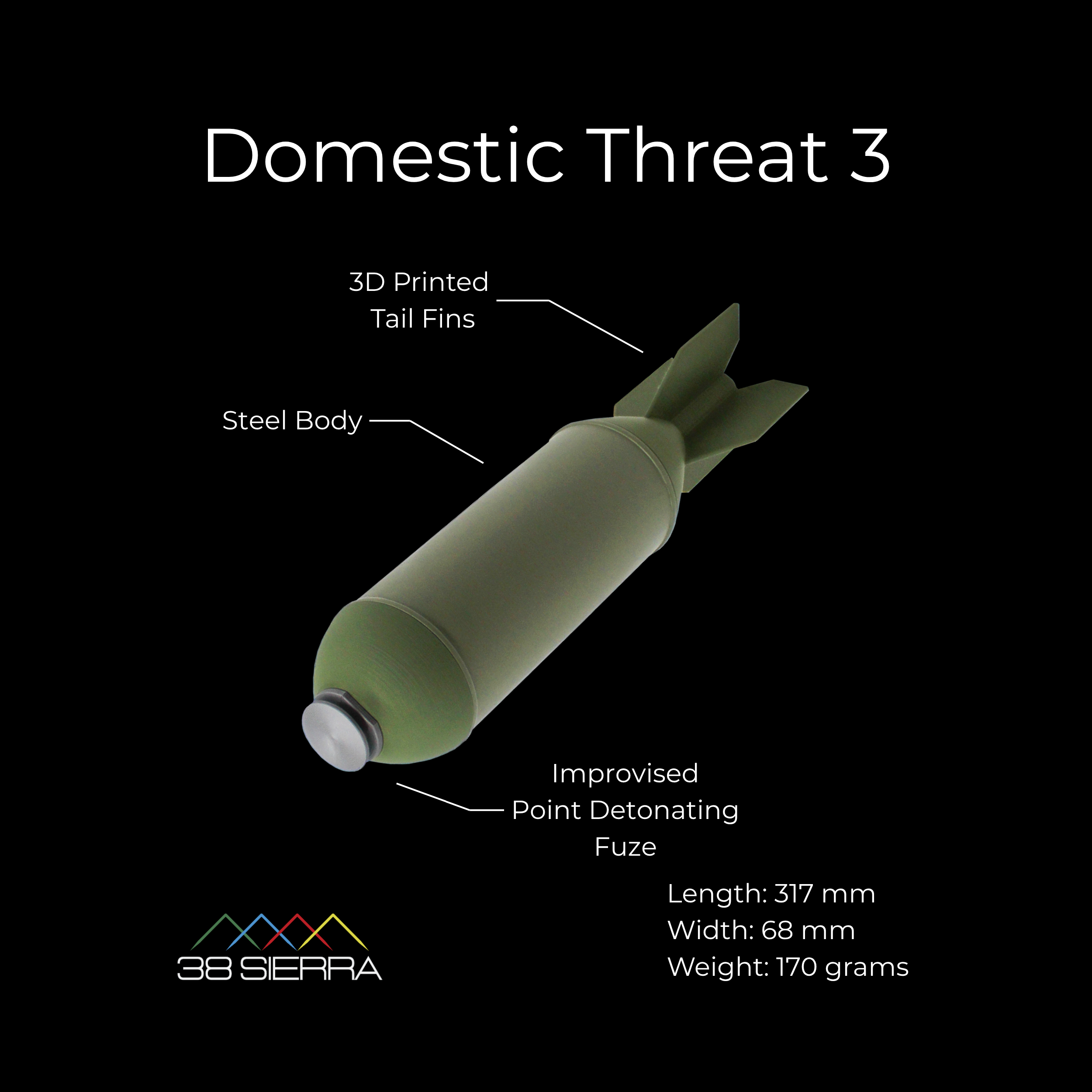
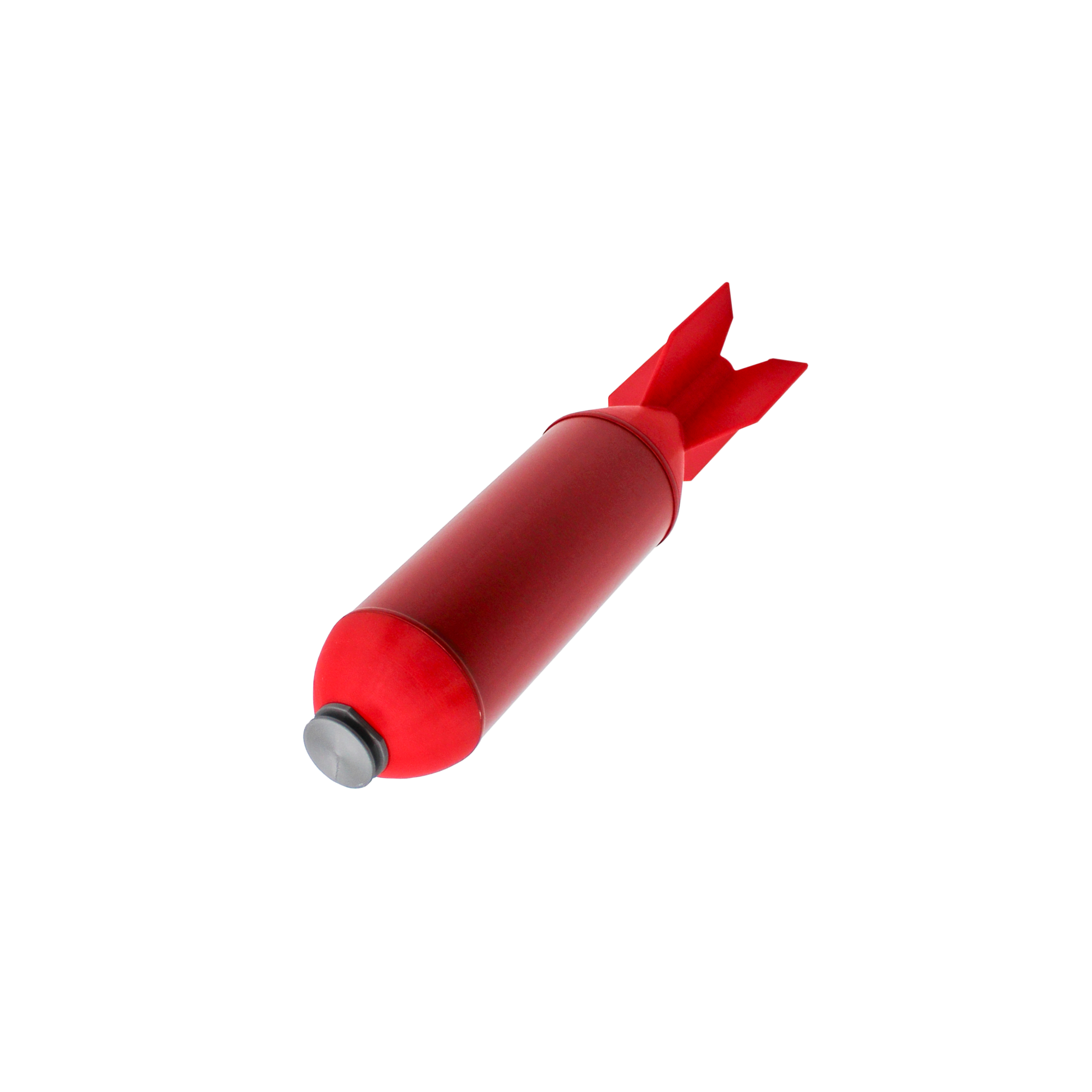
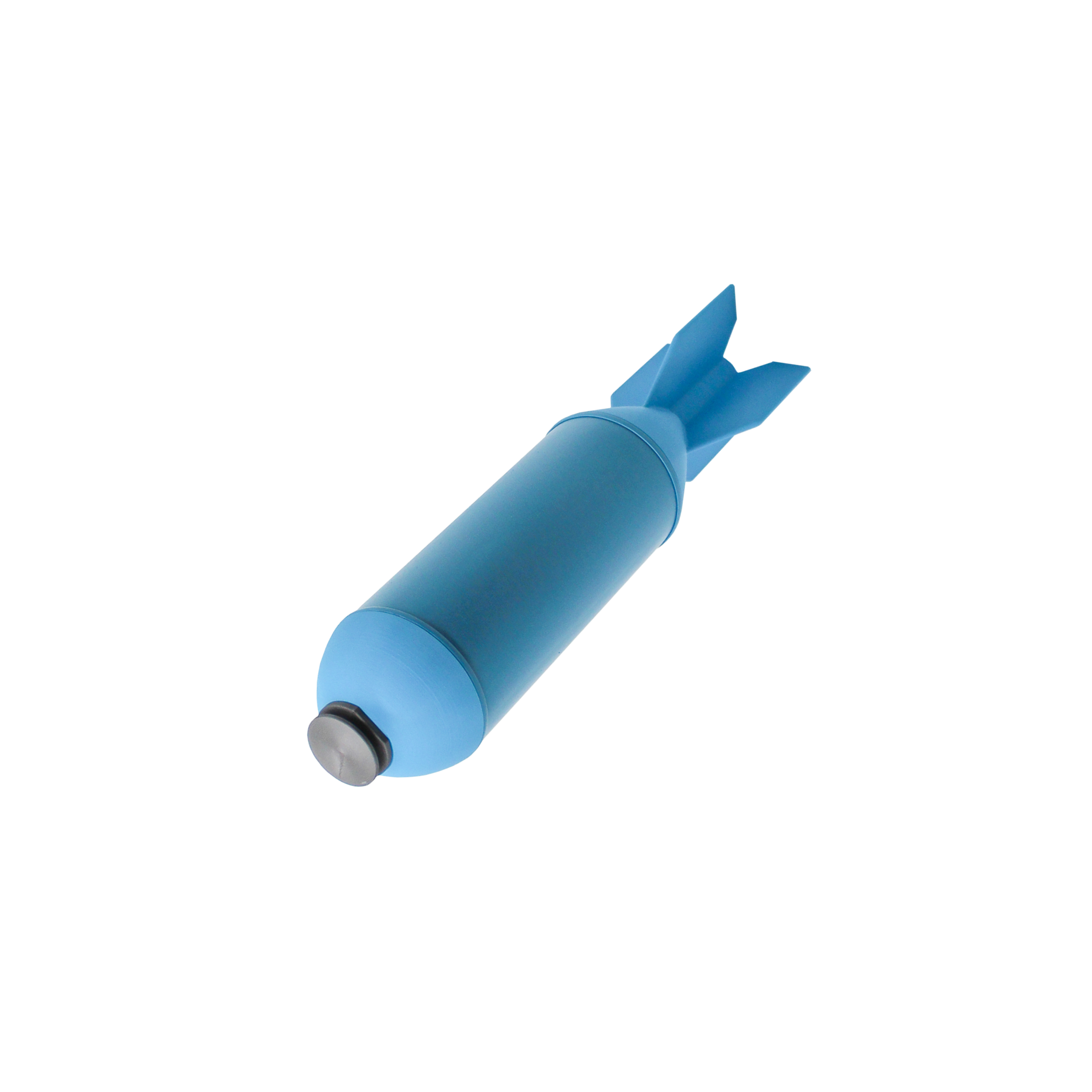
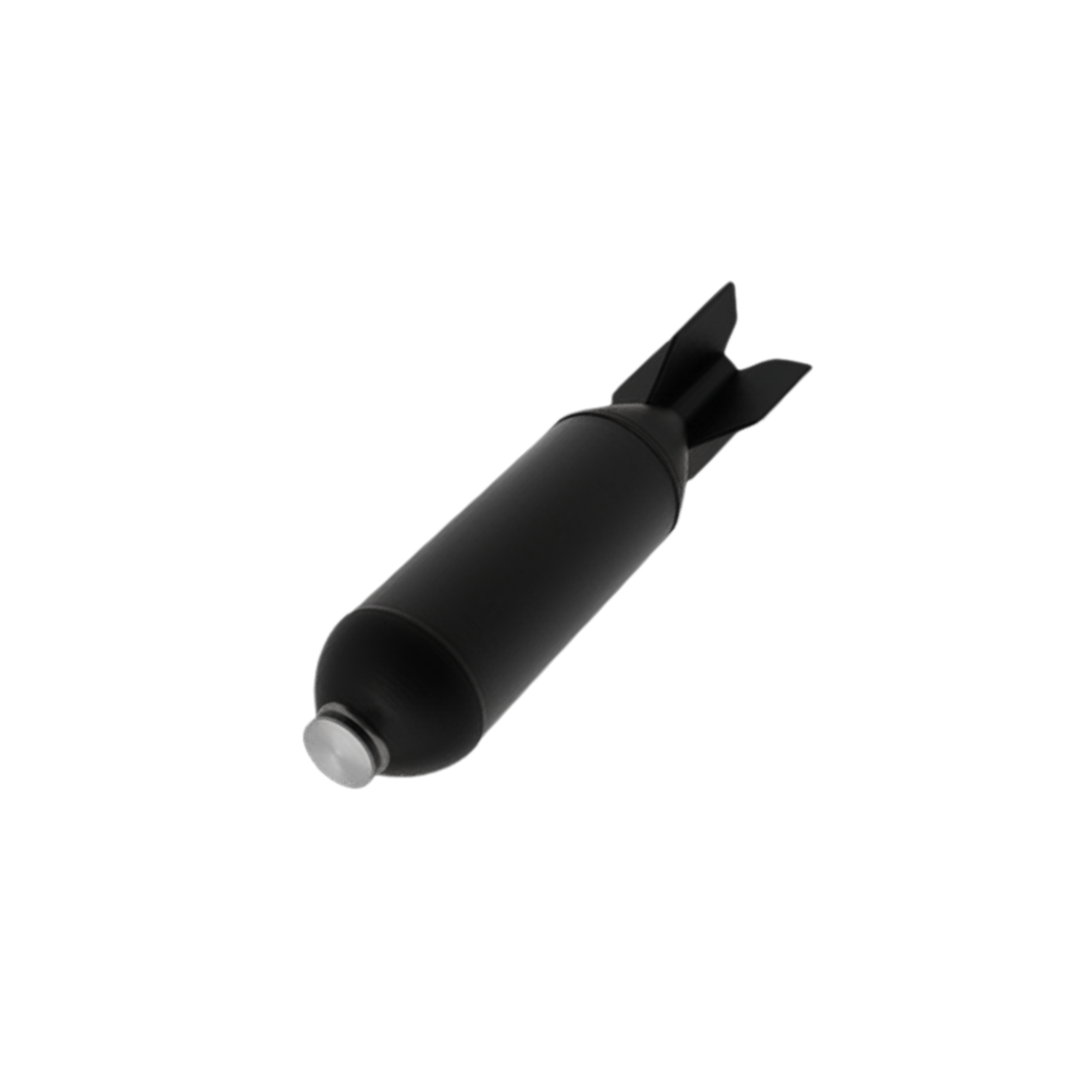
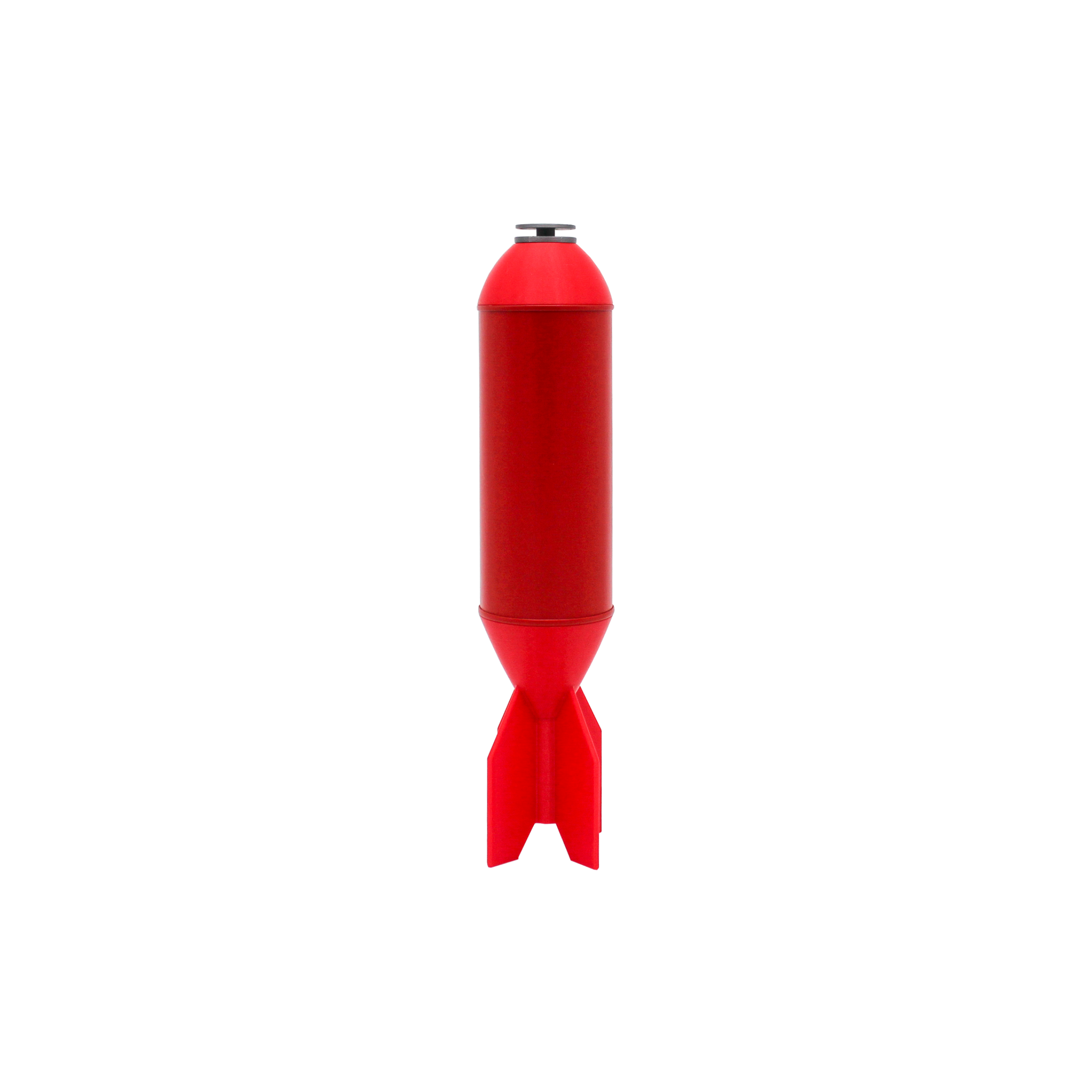

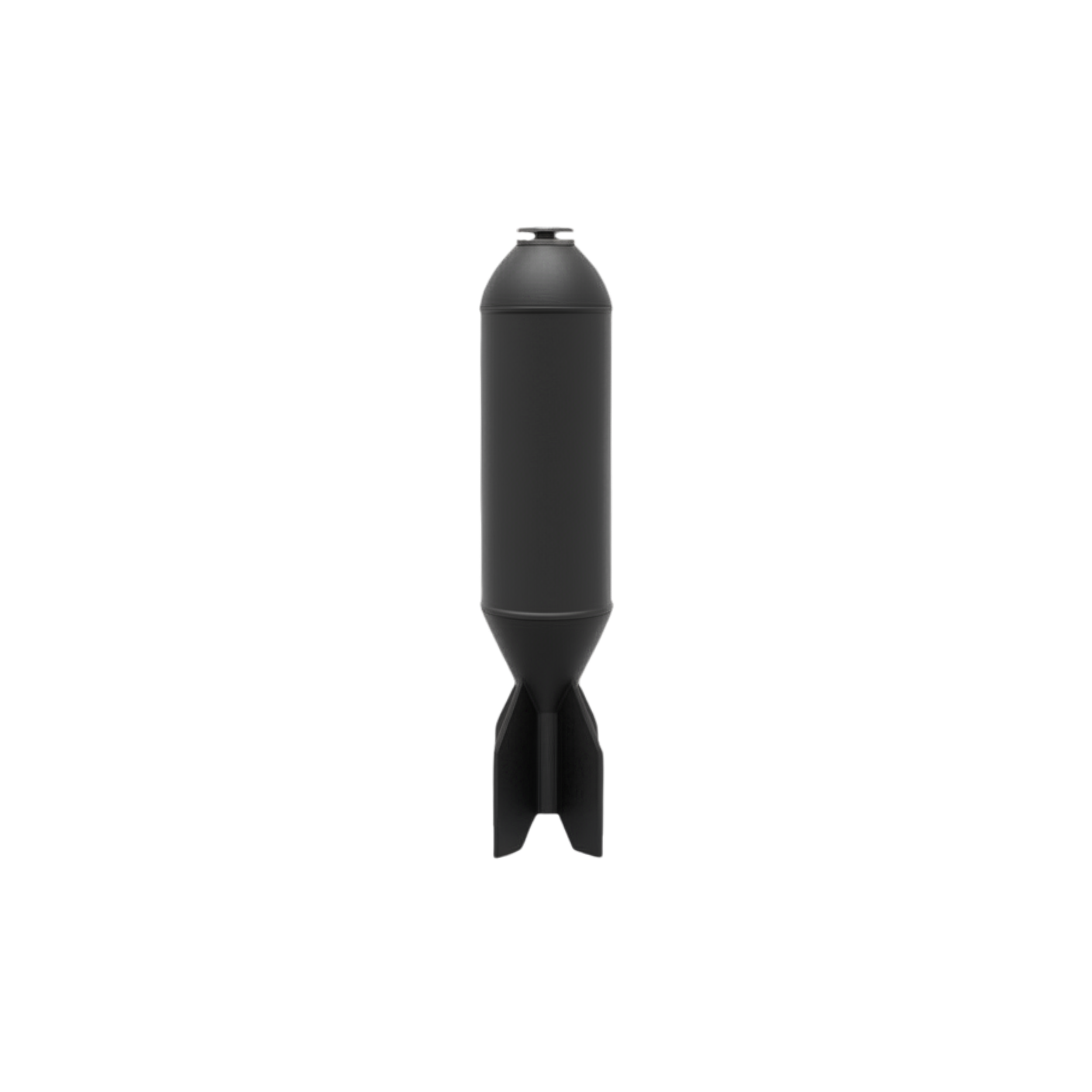
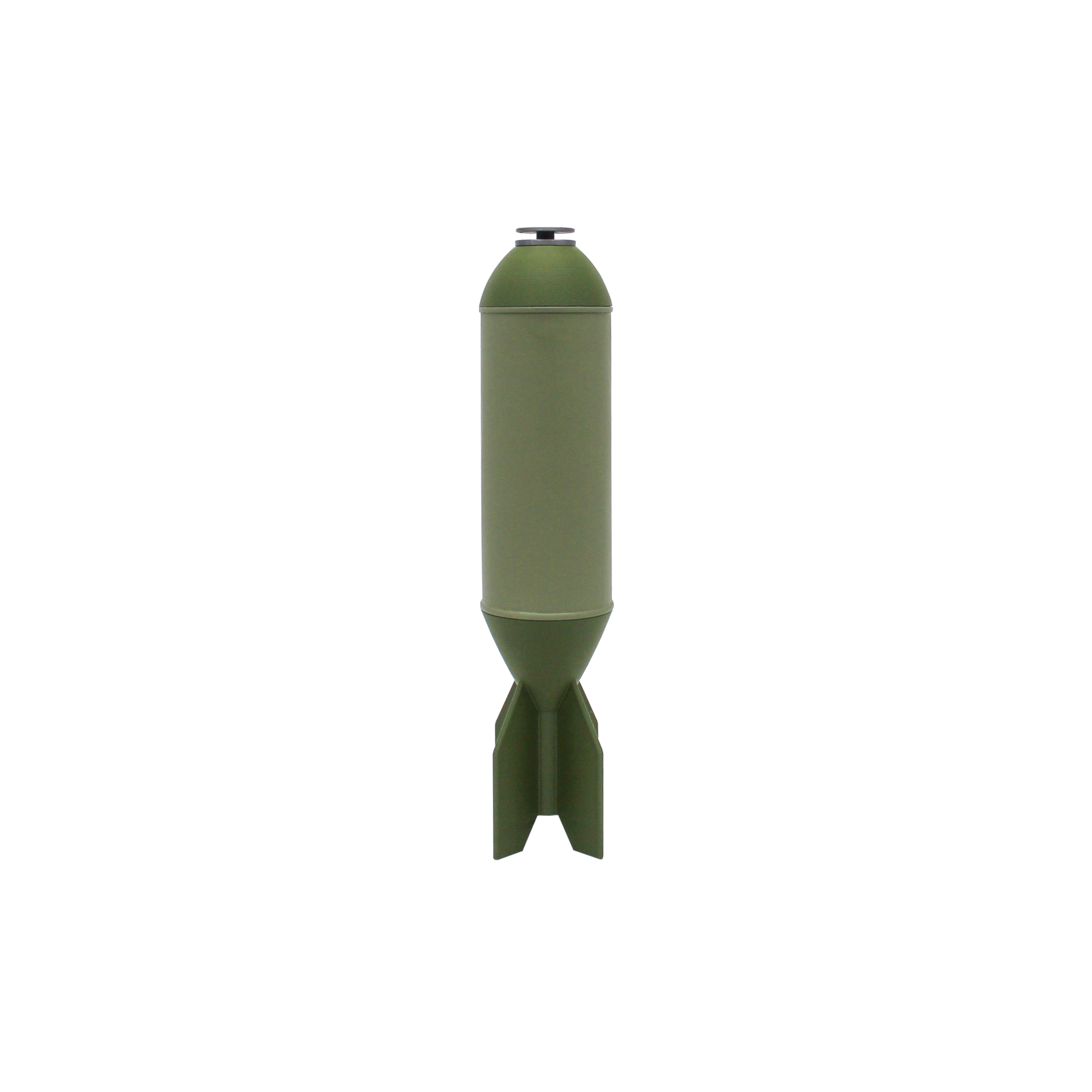
Domestic Threat 3 Drone Munition Inert Training Aid
Inert Replica Improvised UAV-Delivered IED for Counter-UAS, EOD, and Law Enforcement Training (U.S. Border / Latin America Threat Context)
This inert Domestic Threat 3 drone munition training aid replicates an improvised aerial-delivered munition consistent with larger payload configurations observed in Latin America and along the U.S. border region that has been modified for use as a drone dropped improvised explosive device. It is designed to support personnel in recognizing and safely responding to drone-delivered improvised explosive threats, including expanded or higher-mass aerial IED payloads.
This type of munition represents a class of improvised drone-delivered ordnance constructed from readily available materials and configured for aerial deployment using commercially available unmanned aerial systems. These devices often incorporate stabilizing features, attachment mechanisms, and simple initiation systems, and may vary significantly in size and configuration depending on intended use and available materials. The existence of larger payload variants highlights how drone-delivered IED threats continue to evolve in both capability and scale.
The increasing use of drone-delivered improvised munitions in regions adjacent to the United States demonstrates a growing operational concern for domestic security and public safety organizations. These threats reflect the convergence of accessible drone technology and improvised explosive device construction, creating hazards that responders must be prepared to identify and manage.
38 Sierra’s Domestic Threat 3 training aid provides a realistic, inert replica representation to support counter-UAS training, Improvised Explosive Device (IED) training aid applications, and drone munition recognition, including integration into Drone Incident Response Training (DIRT) and broader drone threat response procedures.
Training Applications
This training aid supports instruction across operational environments where drone-delivered improvised munitions, aerial IEDs, and emerging domestic drone threats are a concern.
Core Training Uses:
Recognition of larger drone-delivered improvised munitions and aerial IED payloads
Counter-UAS response procedures for grounded or recovered drones
Bomb squad and EOD IED training aid applications and threat identification
Law enforcement and security personnel hazard awareness
Military and critical infrastructure protection exercises
Scenario-Based Training:
Drone crash or forced landing response
Suspicious payload or munition recovery
Response to drone overflight
Pre-detonation and post-incident threat assessment
Critical infrastructure protection scenarios
Product Specifications
Length: 317 mm
Width: 68 mm
Weight: 170 grams
Operational Context: U.S. Border and Latin America
The continued development of improvised drone-delivered munitions by organized criminal groups in Latin America and regions bordering the United States demonstrates a rapidly evolving threat environment. These devices are commonly deployed using commercially available drones and may include a wide range of configurations, from compact pipe-based devices to larger payload systems capable of carrying increased explosive material.
The presence of larger improvised aerial IED configurations highlights the expanding capability of drone platforms to deliver more substantial payloads. This evolution increases both the potential impact of these devices and the complexity of response operations for personnel encountering them.
Unlike standardized or conventional munitions, improvised drone-delivered devices often lack consistent construction, increasing uncertainty and risk for responding personnel. Their variability reinforces the importance of training focused on recognition, hazard assessment, and safe response procedures.
The proximity of these threats to the United States underscores the need for preparedness among domestic law enforcement, bomb squads, EOD personnel, and infrastructure security teams.
Training with realistic inert drone munition training aids allows personnel to safely develop recognition skills and response procedures relevant to current and emerging drone threats.
Drone IED Threats Near the U.S. Border and Latin America
View More Inert Drone Munitions Training Aids
Product Features
Accurate inert replica of a larger improvised drone-delivered IED
Represents evolving drone threats observed in Latin America and near the U.S. border
Designed for inert drone munition and IED training scenarios
Reinforces recognition of expanded and higher-mass drone-delivered threats
Durable construction for repeated field and classroom use
Safe, inert design with no explosive components
Ideal for counter-UAS, EOD, and law enforcement training programs
Related Training Focus Areas
This product supports training across:
Inert drone munition training aids
Counter-UAS and grounded drone response
Improvised Explosive Device (IED) recognition
Domestic drone threat response
Learn About Safe Response to Grounded Drones
Learn more about this threat type: → Drone-Delivered Explosive Threats
Inert Replica Improvised UAV-Delivered IED for Counter-UAS, EOD, and Law Enforcement Training (U.S. Border / Latin America Threat Context)
This inert Domestic Threat 3 drone munition training aid replicates an improvised aerial-delivered munition consistent with larger payload configurations observed in Latin America and along the U.S. border region that has been modified for use as a drone dropped improvised explosive device. It is designed to support personnel in recognizing and safely responding to drone-delivered improvised explosive threats, including expanded or higher-mass aerial IED payloads.
This type of munition represents a class of improvised drone-delivered ordnance constructed from readily available materials and configured for aerial deployment using commercially available unmanned aerial systems. These devices often incorporate stabilizing features, attachment mechanisms, and simple initiation systems, and may vary significantly in size and configuration depending on intended use and available materials. The existence of larger payload variants highlights how drone-delivered IED threats continue to evolve in both capability and scale.
The increasing use of drone-delivered improvised munitions in regions adjacent to the United States demonstrates a growing operational concern for domestic security and public safety organizations. These threats reflect the convergence of accessible drone technology and improvised explosive device construction, creating hazards that responders must be prepared to identify and manage.
38 Sierra’s Domestic Threat 3 training aid provides a realistic, inert replica representation to support counter-UAS training, Improvised Explosive Device (IED) training aid applications, and drone munition recognition, including integration into Drone Incident Response Training (DIRT) and broader drone threat response procedures.
Training Applications
This training aid supports instruction across operational environments where drone-delivered improvised munitions, aerial IEDs, and emerging domestic drone threats are a concern.
Core Training Uses:
Recognition of larger drone-delivered improvised munitions and aerial IED payloads
Counter-UAS response procedures for grounded or recovered drones
Bomb squad and EOD IED training aid applications and threat identification
Law enforcement and security personnel hazard awareness
Military and critical infrastructure protection exercises
Scenario-Based Training:
Drone crash or forced landing response
Suspicious payload or munition recovery
Response to drone overflight
Pre-detonation and post-incident threat assessment
Critical infrastructure protection scenarios
Product Specifications
Length: 317 mm
Width: 68 mm
Weight: 170 grams
Operational Context: U.S. Border and Latin America
The continued development of improvised drone-delivered munitions by organized criminal groups in Latin America and regions bordering the United States demonstrates a rapidly evolving threat environment. These devices are commonly deployed using commercially available drones and may include a wide range of configurations, from compact pipe-based devices to larger payload systems capable of carrying increased explosive material.
The presence of larger improvised aerial IED configurations highlights the expanding capability of drone platforms to deliver more substantial payloads. This evolution increases both the potential impact of these devices and the complexity of response operations for personnel encountering them.
Unlike standardized or conventional munitions, improvised drone-delivered devices often lack consistent construction, increasing uncertainty and risk for responding personnel. Their variability reinforces the importance of training focused on recognition, hazard assessment, and safe response procedures.
The proximity of these threats to the United States underscores the need for preparedness among domestic law enforcement, bomb squads, EOD personnel, and infrastructure security teams.
Training with realistic inert drone munition training aids allows personnel to safely develop recognition skills and response procedures relevant to current and emerging drone threats.
Drone IED Threats Near the U.S. Border and Latin America
View More Inert Drone Munitions Training Aids
Product Features
Accurate inert replica of a larger improvised drone-delivered IED
Represents evolving drone threats observed in Latin America and near the U.S. border
Designed for inert drone munition and IED training scenarios
Reinforces recognition of expanded and higher-mass drone-delivered threats
Durable construction for repeated field and classroom use
Safe, inert design with no explosive components
Ideal for counter-UAS, EOD, and law enforcement training programs
Related Training Focus Areas
This product supports training across:
Inert drone munition training aids
Counter-UAS and grounded drone response
Improvised Explosive Device (IED) recognition
Domestic drone threat response
Learn About Safe Response to Grounded Drones
Learn more about this threat type: → Drone-Delivered Explosive Threats