
Drone Response Training Scenarios
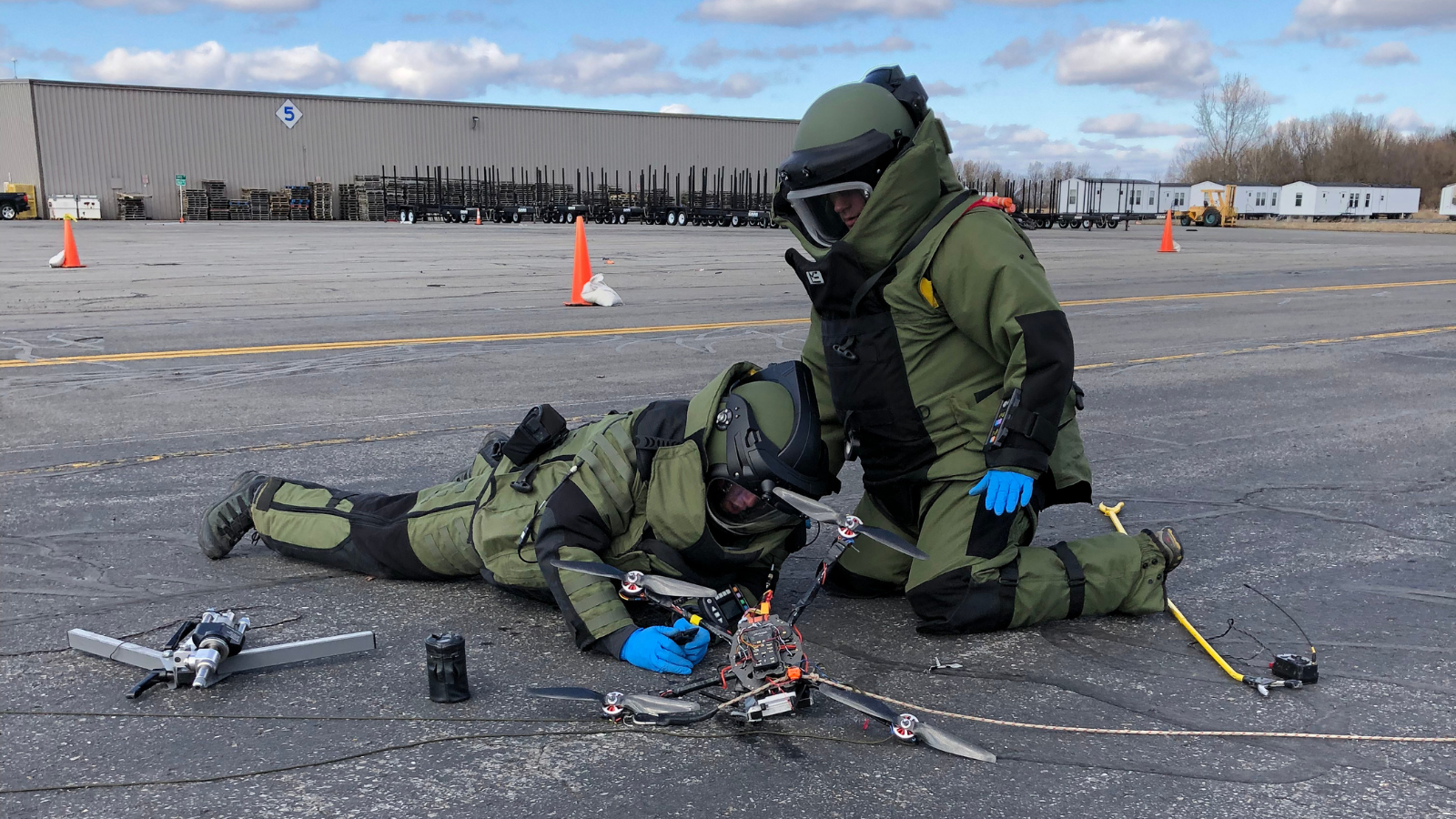
UAS Response Training Can And Should Be Exercised By More Than Just First Responders
Example Drone Incident Response Training Exercises
Training for Unmanned Aircraft System (UAS) incidents is becoming an essential responsibility for law enforcement, military units, security teams, and critical infrastructure operators. While much attention is placed on detecting and stopping drones in the air, many incidents ultimately involve personnel responding to drones or payloads on the ground.
Organizing realistic training for drone incidents can seem difficult, but effective training scenarios do not require a drone to be airborne. Scenario-based training using grounded drones, dropped payload simulators, and exercise injects allows organizations to conduct meaningful Counter-UAS training with minimal setup and coordination.
The example training scenarios below are designed to help agencies develop procedures, evaluate response capabilities, and improve readiness for drone-related incidents.
These scenarios can be used for individual unit training, facility security exercises, or multi-agency training events.
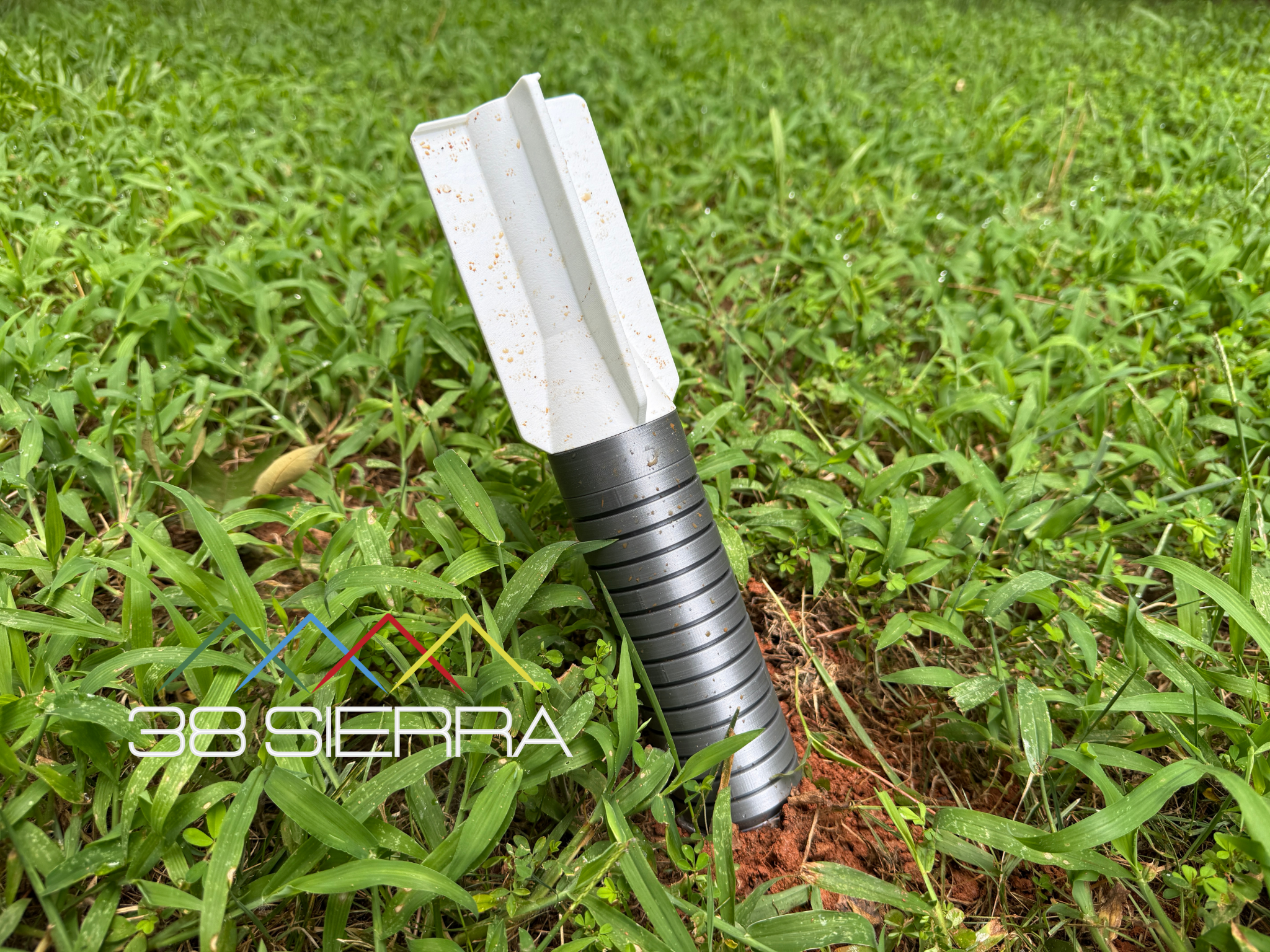
OFSP 1.7 UAS Dropped Munition Inert Training Aid
Scenario 1 - Drone Overflight with Dropped Object
In this training scenario, an unknown drone is reported overflying a facility, critical infrastructure site, or public area. Witnesses report that an unknown object fell from the drone before the aircraft departed the area. There are no reports of explosions, injuries, or damage at the time of the report.
Responding personnel should be dispatched to establish a cordon and search the area for the suspected dropped object.
This scenario is designed to train personnel on search procedures, hazard recognition, reporting procedures, and scene management for suspected drone-delivered payloads.
Training Scenario Objectives
This scenario should evaluate the ability of personnel to:
Establish an effective cordon
Conduct an organized search of the affected area
Identify potential hazards
Maintain safe distance from suspected hazards
Use available cover and concealment appropriately
Accurately report the location, appearance, and condition of any suspected hazards
Training Aid Employment
To increase realism, inert drone-dropped munition training aids can be placed along the reported flight path of the drone. Training aids can be placed on pavement, partially buried in soil, or positioned in elevated locations such as rooftops, trees, or equipment structures to increase scenario difficulty.
This scenario reinforces the importance of search procedures and hazard recognition when responding to a suspected drone payload incident.
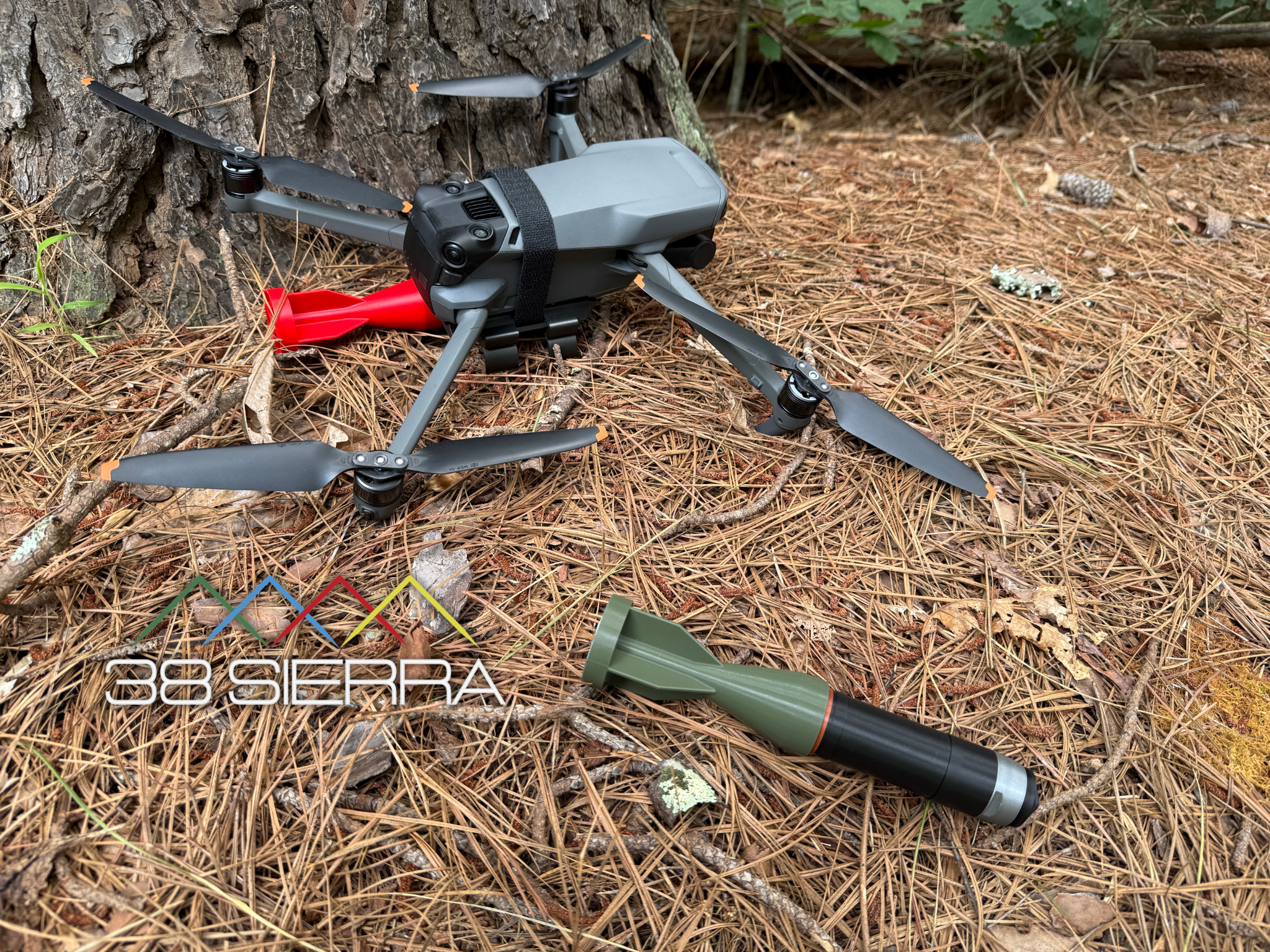
Weaponized UAS with VOG-17 Grenade UAS Dropped Munition Inert Training Aids
Scenario 2 - Downed or Crashed Drone
In this scenario, one or more drones operating in the area were identified as a potential threat and were engaged by Counter-UAS systems or otherwise crashed or landed in the area. Responding personnel are dispatched to locate and assess the downed drone.
This scenario focuses on grounded drone incident response procedures and hazard recognition associated with crashed or recovered unmanned aircraft systems.
Personnel responding to a downed drone must treat the aircraft as a potential hazard until it can be properly assessed. The drone may contain explosive payloads, hazardous materials, contraband, or intelligence value.
Training Scenario Objectives
This scenario should evaluate the ability of personnel to:
Establish an effective cordon around the downed drone
Conduct a search for additional hazards or dropped payloads
Identify potential hazards associated with the drone
Maintain safe standoff distance
Properly report drone description and hazard indicators
Coordinate with Bomb Squad, EOD, or specialized units if required
Training Aid Employment
To increase realism, inert drone payload training aids can be attached to the drone or placed nearby to simulate detached payloads after impact. Multiple payload training aids can be used to simulate drones carrying multiple munitions.
For more advanced training scenarios, the downed drone and associated payloads can be placed in elevated or difficult-to-access locations such as trees, rooftops, industrial equipment, or confined spaces.
This scenario reinforces safe response procedures, hazard recognition, and reporting for grounded drone incidents.
Why Scenario-Based Counter-UAS Training Is Important
Many organizations are investing in drone detection and Counter-UAS technology, but the response to a grounded drone or recovered payload is often where personnel are most at risk.
Personnel encountering a drone on the ground must be prepared to:
Recognize potential hazards
Establish safe cordons
Conduct search operations
Identify payload indicators
Report observations accurately
Coordinate with specialized response units
Preserve evidence for exploitation or investigation
Scenario-based training allows personnel to practice these skills in a controlled environment before encountering a real-world incident.
Training does not need to be complex to be effective. Simple scenarios using training aids, injects, and realistic objectives can significantly improve preparedness and safety.

38 Sierra Basic Drone Ordnance Training Aid Kit
Using Training Aids to Increase Realism
Inert drone payload training aids and grounded drone training aids can significantly increase the realism and effectiveness of Counter-UAS training exercises. These training aids allow agencies to simulate real-world drone threats without introducing actual hazards.
Training aids can be used for:
Classroom instruction
Tabletop exercises
Facility security exercises
Field training exercises
Multi-agency exercises
Bomb squad and EOD training
Critical infrastructure security training
Law enforcement training
Military installation training
Realistic training scenarios help personnel build familiarity, confidence, and safe response habits before encountering an actual drone incident.
Conclusion
Drone incidents are no longer rare or unusual events. Personnel across military, law enforcement, corrections, critical infrastructure, and private security organizations are increasingly likely to encounter drones during operations.
Detection and Counter-UAS systems are only part of the solution. Personnel must also be trained to safely respond when a drone is found on the ground or when a drone payload is discovered.
Scenario-based Counter-UAS training helps organizations develop procedures, evaluate readiness, and prepare personnel to safely manage drone incidents.
To learn more about Drone Incident Response Training and inert UAS training aids, visit 38Sierra.co.